What a Football Team Can Teach Us About the High-Performance Zone
by Margie DuBois, CPC
February 4, 2026
Have you ever walked into a restaurant or department store, and immediately sensed how well the employees are working together?
The energy is different. The teamwork is visible. Employees speak to each other with respect, and roll up their sleeves without hesitation.
What you’re picking up in those moments isn’t just a coincidence — it’s an indication of whether or not people feel safe to contribute, take initiative, and hold each other accountable.
These variables are ultimately what shape the company’s performance in the end. Because teams excel the most when organizations set high standards and maintain psychological safety over time.
One of the clearest examples I’ve seen of this equation is the Seattle Seahawks under Head Coach Mike Macdonald. Over the past two years, his leadership has shown exactly what this looks like in practice.
Since joining the team, Mike has consistently modeled quiet confidence, humility, and focus. You don’t see him yelling at players on the sidelines or making himself the center of attention. His leadership is steady, calm, and intentional, and that tone carries through the entire organization.
You can see the impact in how the team shows up. In post-game interviews, the language is almost always about “we,” not “me.” Players lift each other up, credit their coaches, and stay focused on what’s next instead of chasing individual recognition.
That kind of team behavior doesn’t happen by accident — it’s the result of leadership that sets a high bar for performance while creating an environment where people feel safe to learn, speak up, own mistakes, and support one another.
This is exactly what the research on psychological safety shows, and why I use this framework so often in my work with leadership teams:
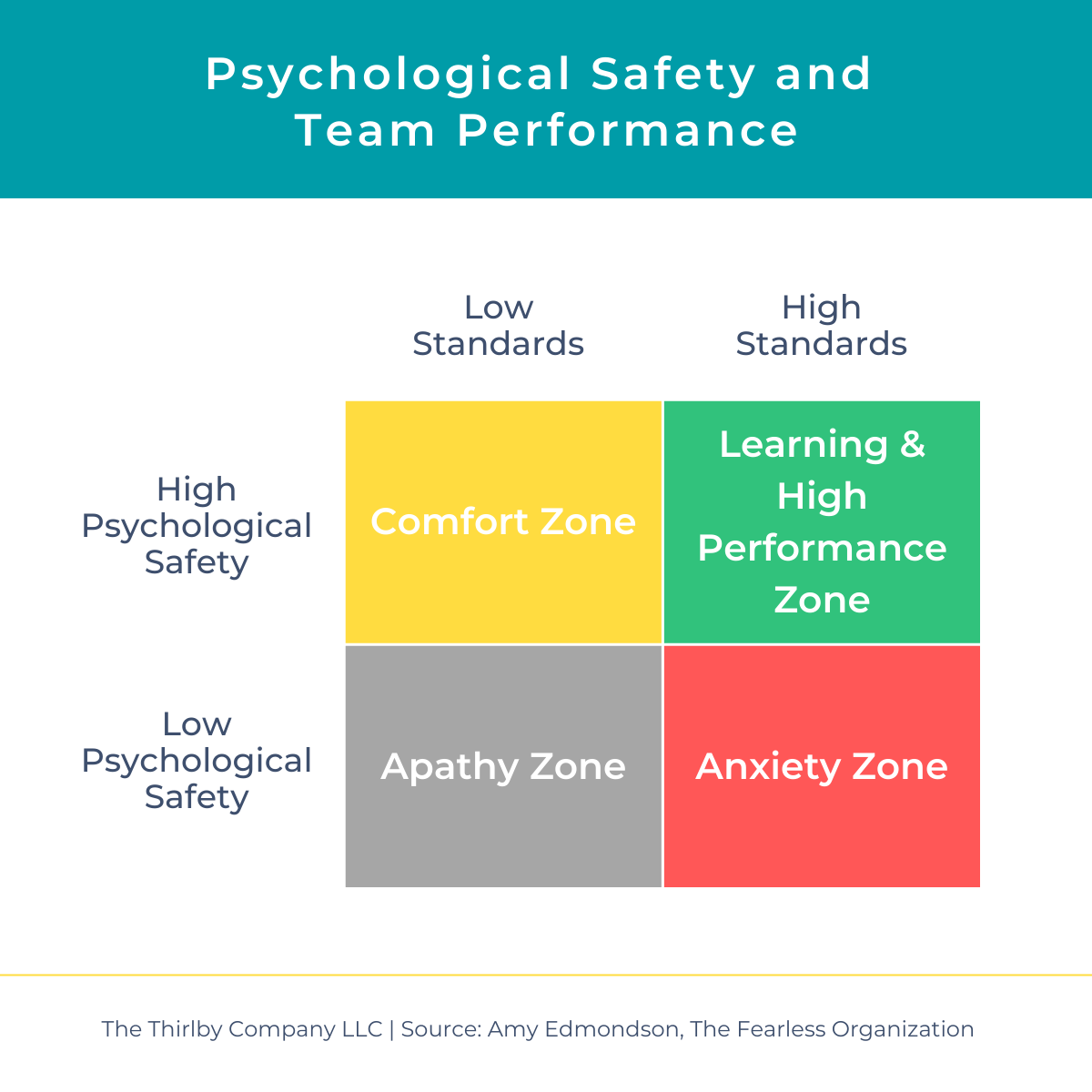
High psychological safety paired with low standards leads to the comfort zone. People feel supported, but growth and accountability stall.
High standards paired with low psychological safety leads to the anxiety zone. People work hard, but fear and burnout run the show.
But when high standards are maintained with high psychological safety, teams enter into the learning and high-performance zone. It’s where they stretch, innovate, take responsibility, and trust each other enough to get better together. It’s where the magic begins.
When teams consistently operate in this zone, extraordinary things can happen. Like a football team heading to the Super Bowl for the first time in over a decade.
But the real takeaway here isn’t just about football — it’s about leadership. In every organization, leaders shape performance not only through strategy and goals, but through the behaviors they model, the expectations they reinforce, and the work environment they create, day after day.
Culture is built in patterns. And over time, those patterns determine whether or not teams win.